

 Tours
 Soft Adventure
 Stargaze
 Dark Sky Astro Experience
 Snowshoe
 Hiking
 Fishing
 Photography
 Activities
 Food and Drink Tours
 Weddings
 Groups
 RMNP Webcam
 Dark Sky Hub
Downtown Estes Park in One Walk
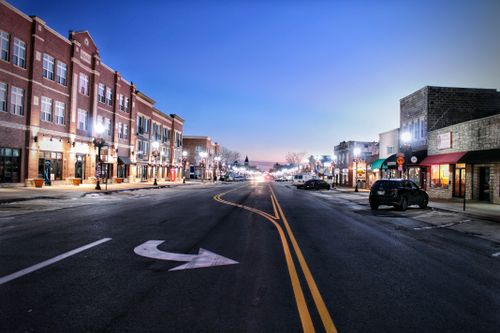
The best way to understand Estes Park is to walk it. Downtown is four walkable blocks along Elkhorn Avenue, with the Big Thompson River tracing the south edge and Longs Peak rising in the southwest. The whole walk takes less than an hour if you do not stop. You will stop. Every block has a story, and the stories stack up like the layers of the mountains themselves.
Start at the west end, at Elkhorn Lodge on West Elkhorn Avenue. The lodge is a compound of six rough hewn buildings put up between 1877 and 1908, and it is on the National Register of Historic Places. It looks the way the first Estes Park looked: log and timber, built by hand, made to last through mountain winters. Standing there, you are standing in the oldest part of the town's resort story, from the years when visitors arrived by wagon and stayed for the summer because the air was thought to cure what ailed them.
The valley had been a summer place long before any lodge was built. Ute and Arapaho families used it as a summer hunting ground for thousands of years, drawn by the same things that draw people now: the water, the game, the cool air. Joel Estes, a cattle rancher from Missouri, settled here in 1859 and gave the valley his name. In the spring of 1905, Abner Sprague platted the town around the handful of buildings already standing where Elkhorn and Moraine avenues meet, and within a decade most of the footprint of today's downtown was in place.
Walk east down Elkhorn and you are walking through the town's commercial history. The street holds candy shops, outdoor gear stores, art galleries, and shops selling Colorado made goods, and many of them sit in buildings that have served visitors for generations. The storefronts have changed hands and changed purposes many times over, and the details of which shop stands in which original building are the kind of thing the Estes Park Museum keeps track of.
The museum is worth the detour. Admission is free, and it covers the town's history from its Native roots through the Stanley era. It is the place to go when a question on this walk has no answer on the street, and it is run by people who know where the records are.
Above the downtown, on the hill to the north, sits the building that changed everything. Freelan O. Stanley, the inventor of the Stanley Steamer automobile, came to Estes Park in 1903 hoping the mountain air would help his tuberculosis. It did, and he stayed. On the Fourth of July in 1909 he opened the Stanley Hotel, a grand Colonial Revival building in white clapboard with a red roof, and one of the first fully electric hotels in the world. The hotel turned a rough mountain village into a resort for wealthy travelers, and it has been on the National Register of Historic Places since 1977.
The Stanley is famous now for a different reason. Stephen King stayed here in 1974, in room 217, and the hotel inspired his novel The Shining. The 1980 film was not shot here, though the television miniseries was. The ghost stories are part of the tour now, but the real story is more interesting: a sick man who came for the air, got well, and built a hotel that put a small Colorado town on the map.
Keep walking east and the street tells the harder part of the town's history. On July 15, 1982, the dam at Lawn Lake above Estes Park gave way, and a wall of water came down through downtown. The flood damaged or destroyed 177 buildings and killed three campers on the nine mile route between the lake and town. Much of Elkhorn Avenue was destroyed. The Riverwalk area along the Big Thompson was reshaped in the rebuilding that followed, and the walk you take today along the river is in many ways a product of that flood.
The town was incorporated in 1917, and by then it was already what it is now: a small town that exists because of the park next door and the people who come to see it. Rocky Mountain National Park was established in 1915, and Estes Park became its eastern gateway. The museum, the lodge, the hotel, and the shops on Elkhorn all belong to that same story, a town that grew up serving visitors and then became a place where people stayed.
That is the walk. Four blocks, about an hour, and more than a century of history. The mountains have not changed. The river has not changed. What has changed, over and over, is what people built beside them, and what the water took away, and what the town built again.
Go with a guide
If you would rather go with someone who knows the trails, the sky, and the seasons, our guides lead trips in Rocky Mountain National Park and around Estes Park every day. See the guided tours and pick the one that fits your trip.
-
Posted in
Estes Park Life