

 Tours
 Soft Adventure
 Stargaze
 Dark Sky Astro Experience
 Snowshoe
 Hiking
 Fishing
 Photography
 Activities
 Food and Drink Tours
 Weddings
 Groups
 RMNP Webcam
 Dark Sky Hub
The Rocky Mountain National Park Night Sky Through the Year
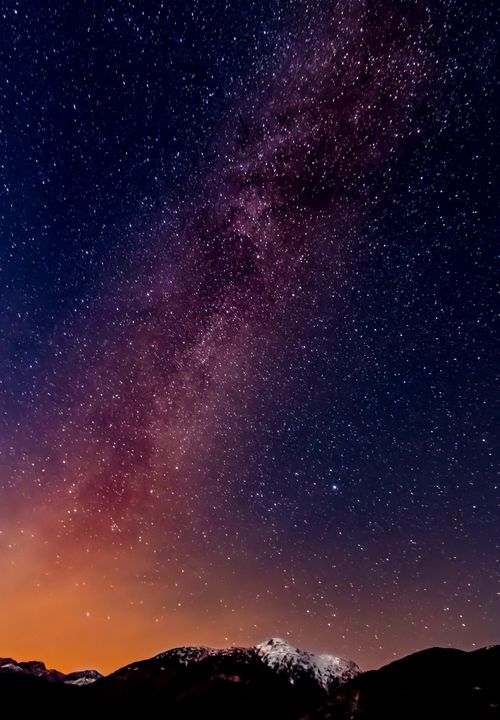
The Rocky Mountain National Park night sky is not one sky. It changes with the seasons, and each season has its own stars and its own reason to go out after dark. Here is what is overhead through the year.
Spring: the sky wakes up
Spring nights in the park are still cold, but the sky starts to open up. Leo the lion rides high in the south, and the Big Dipper stands overhead. The bright core of the Milky Way returns to the pre-dawn sky and rises earlier each night through spring, so by May it is up before midnight, and through summer it is up for most of the night.
The Lyrid meteor shower peaks in late April, April 21 to 22 in 2027, a modest shower of about 18 meteors an hour under a dark sky. In 2027 the peak falls under a full moon, so only the brightest meteors will show.
Summer: Milky Way season
Summer is the big season, and the reason is the Milky Way. From June through August the bright core of our galaxy stands high in the southern sky, arcing overhead as a dense river of stars. It is at its best around the June solstice, when it is up all night, and the best hours run about 10 PM to 3 AM, with the core highest around midnight. By August and September it is best right after dark.
Look south for Scorpius, with the red star Antares at its heart, and the Summer Triangle overhead. The Perseid meteor shower peaks in August, one of the finest shows of the year. Summer nights are warm by mountain standards, but still bring layers.
Fall: the great square and the Andromeda Galaxy
By fall the Milky Way core is setting soon after dark, and by late October it is gone from the evening sky until spring. What takes its place is just as good. The Great Square of Pegasus rises in the east, and riding above it is the Andromeda Galaxy, the best galaxy in the northern sky and the farthest object visible to the naked eye. Through binoculars it is a clear oval glow. Through a telescope, its bright core and dust lanes start to show.
Cassiopeia makes its W shape high overhead, and the Pleiades star cluster climbs in the east. Fall is also the quietest season in the park after the summer crowds leave. How the Milky Way season works, and when the core returns, is explained here: https://estesparktourguides.com/blogs/news/can-you-see-milky-way-rocky-mountain-national-park
Winter: the finest constellations in the sky
Winter brings the best constellations of the year and the clearest skies. Orion the hunter dominates the evening sky, his three belt stars in a row, Betelgeuse glowing orange red at the shoulder and Rigel shining blue white at the foot. Above Orion sits Taurus with the Pleiades riding high, and low in the southeast Sirius blazes in Canis Major, the brightest star in the night sky.
The Geminid meteor shower, peaking the night of December 13 to 14, is the best meteor shower of the year, with up to 150 meteors an hour under a perfectly dark sky. In 2026 the peak falls under a thin crescent moon; in 2027 it falls under a full moon. The bright core of the Milky Way has set for the season, but the fainter winter band still arcs overhead through Cassiopeia, Perseus, and Orion. The full winter sky is here: https://estesparktourguides.com/blogs/news/winter-night-sky-rocky-mountain-national-park
The Moon and the planets
The Moon decides how good any night will be, in every season. The week around the new moon has the darkest skies of the month. A full moon washes out faint stars but makes the Moon itself and the moonlit peaks spectacular.
Planets move through the constellations over weeks and months, so which ones are up depends on when you visit. Venus, Jupiter, and Saturn are often visible as steady, bright points that do not twinkle the way stars do. Check a sky app on the night you go, set to red mode. When to go is covered in depth here: https://estesparktourguides.com/blogs/news/when-to-go-stargazing-estes-park
How to use this guide
Pick the season you are visiting, then pick a moonless night inside it. If you would rather have someone else read the sky for you, our guided Stargaze tour runs on clear nights in every season: https://estesparktourguides.com/products/hikebyheadlamp
Quick answers
What is the best season for the night sky in Rocky Mountain National Park? Summer for the Milky Way, winter for the clearest skies and the best constellations.
When is the Milky Way visible? The bright core is above the horizon at night from roughly March through October, best June through August.
What meteor showers are best here? The Perseids in August and the Geminids in December.
Go with a guide
If you would rather go with someone who knows the trails, the sky, and the seasons, our guides lead trips in Rocky Mountain National Park and around Estes Park every day. See the guided tours and pick the one that fits your trip.
-
Posted in
Stargazing and Night Sky